
 Available in GB
Content

Player complaints are the most reliable window into how a casino actually operates. Marketing materials tell you what the operator wants you to believe. Complaints tell you what happens when things go wrong. I have reviewed over sixty documented disputes involving Loki Casino across AskGamblers, Casino Guru, and independent forums, and the patterns that emerge are consistent enough to be instructive — both in what the casino gets wrong and in how it responds when challenged publicly.
Loki Casino UK Player Disputes & Resolution Timelines
I categorised every complaint I could document, and three themes dominate. Delayed withdrawals account for the largest share. Players report submitting a withdrawal request, waiting beyond the stated processing window, and receiving either no communication or vague updates from support. The delays range from a few extra days to several weeks, and in most cases, the withdrawal eventually processes — but the uncertainty and silence during the waiting period is the core of the frustration.
Forced bonus complaints form the second-largest category. These involve players who claim a bonus was applied to their deposit without explicit consent, triggering wagering requirements they did not intend to accept. Some of these complaints appear to stem from the casino’s default bonus opt-in during the deposit process — if the player does not actively deselect the bonus, it applies automatically. Others involve reload bonuses that the player argues were activated without a clear opt-in mechanism.

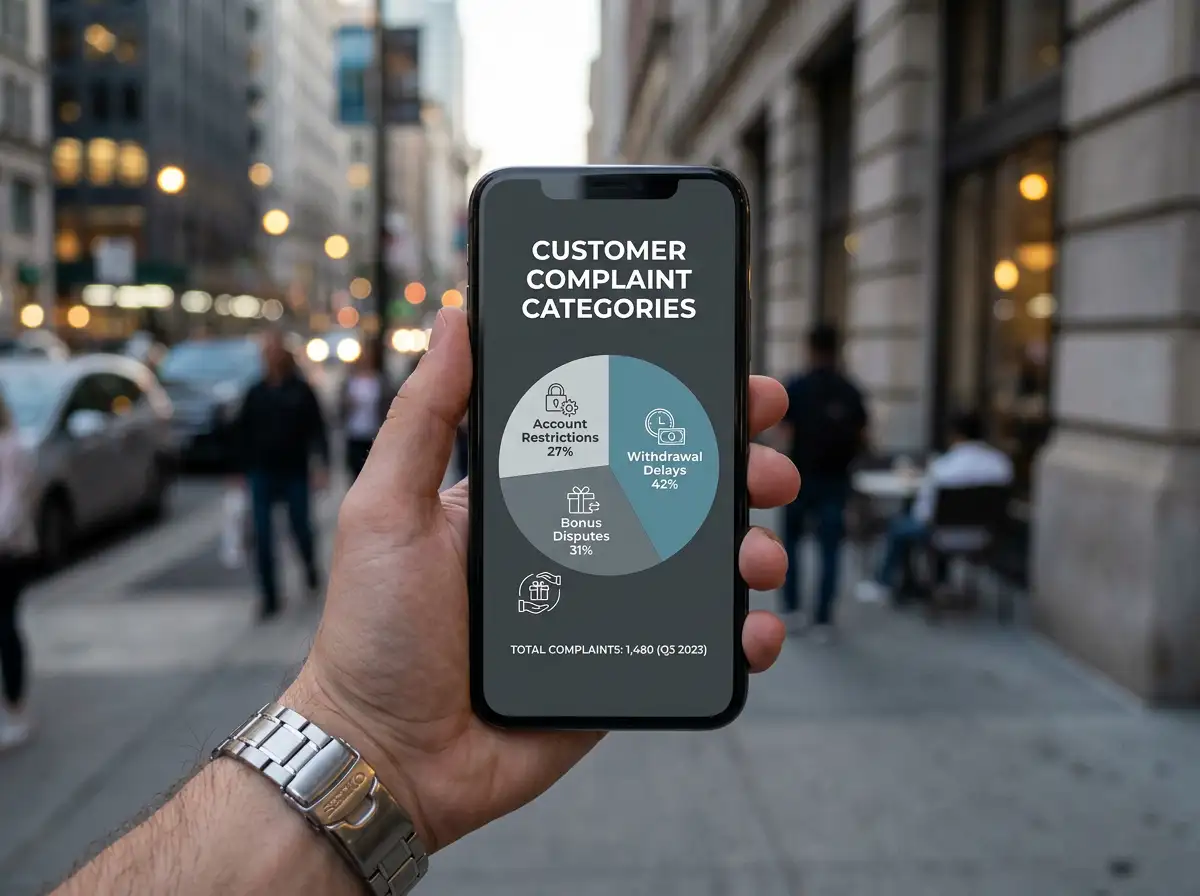
Account closures with balance confiscation make up the third category. These cases typically involve the casino citing Terms and Conditions violations — exceeding max bet limits during wagering, suspected multi-accounting, or geographical restrictions — as justification for closing the account and retaining the balance. The documented cases are often he-said-she-said situations where the player disputes the violation and the casino cites internal logs that are not shared with the player.
The UK Gambling Commission issued 868 cease-and-desist notices and disrupted 264 sites in FY2024/25, but enforcement against individual casino-player disputes at offshore operators falls outside the UKGC’s direct scope, leaving players reliant on the CGA’s complaint mechanism and third-party mediation.
Notable Cases: Confiscation, Forced Bonuses and Delayed Payouts
One case that caught my attention involved a player who deposited, declined the welcome bonus, played through their deposited funds, built up a significant balance, and then had their withdrawal request denied. The casino’s stated reason was that the player had logged in from a restricted jurisdiction, which violated the Terms and Conditions. The player argued they had never been to that jurisdiction and suspected an IP detection error. The dispute went through a third-party mediator, and the casino eventually released a portion of the balance — but not the full amount. Cases like this illustrate the asymmetry of power: the operator controls the data, the logs, and the interpretation of their own terms.
Another documented case involved a forced bonus. A player deposited using cryptocurrency and found a bonus automatically applied to their account. They contacted support immediately to request removal, but were told the bonus had already been wagered against and could not be reversed. The player argued they had not played since the deposit. The dispute was partially resolved after mediation, but the case highlights a systemic issue: the window between bonus application and the player noticing it can be extremely narrow, and any automated play or accidental game load during that window can make reversal impossible.

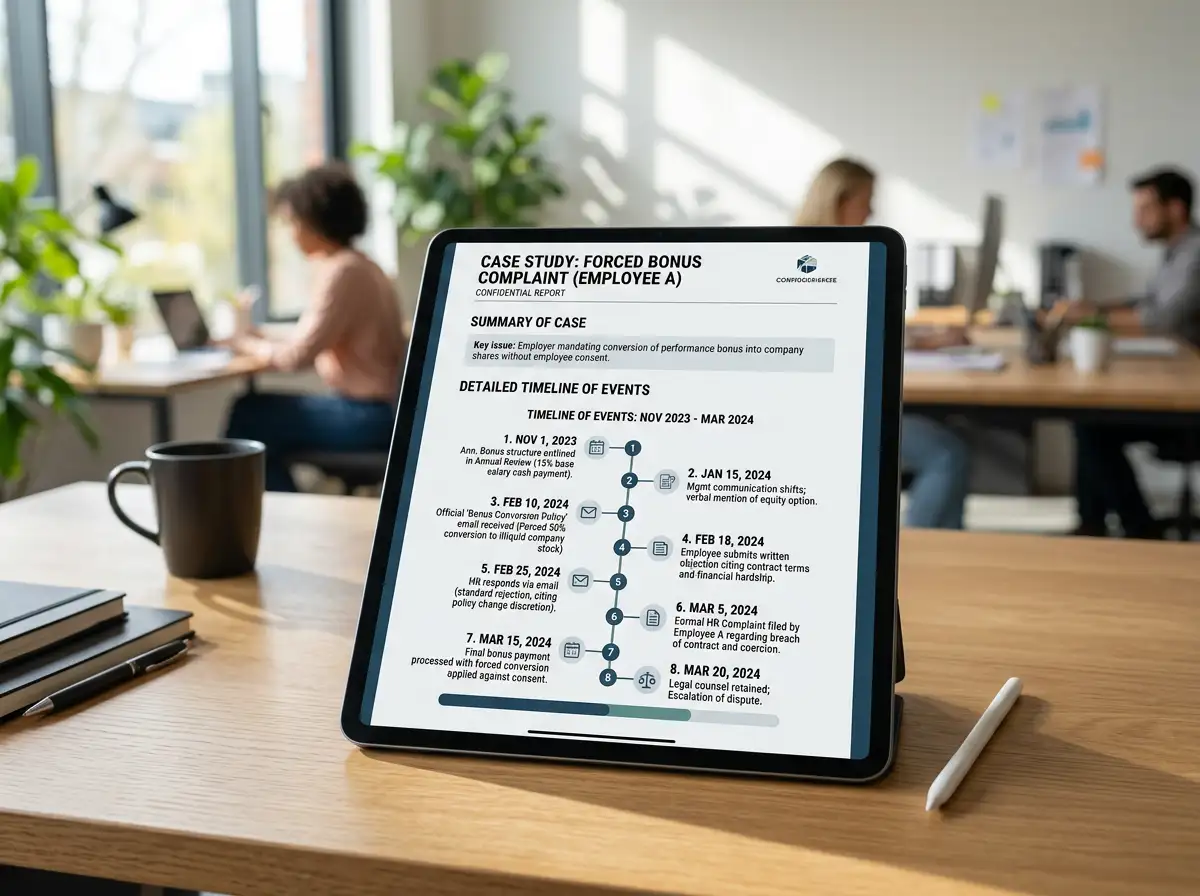
Delayed payout cases follow a remarkably consistent pattern. The player submits KYC documents, the documents are approved, the withdrawal request enters the processing queue, and then — silence. Follow-up messages to support receive templated responses promising escalation. The withdrawal eventually processes, but the delay creates anxiety and erodes trust, even when the outcome is ultimately correct.
How to File and Escalate a Complaint
If standard support fails to resolve your issue, the escalation path involves three stages. First, document everything: save chat transcripts, screenshot your account history, and note transaction IDs, dates, and amounts. Detailed records transform a vague complaint into a specific dispute with evidence.
Second, file a complaint with the Curaçao Gaming Authority through their official complaint channel. Include your account details, the nature of the dispute, evidence of your attempts to resolve directly with the casino, and a clear statement of what resolution you are seeking. The CGA’s complaint handling has improved under the LOK framework, though response times remain slower than UKGC equivalents.

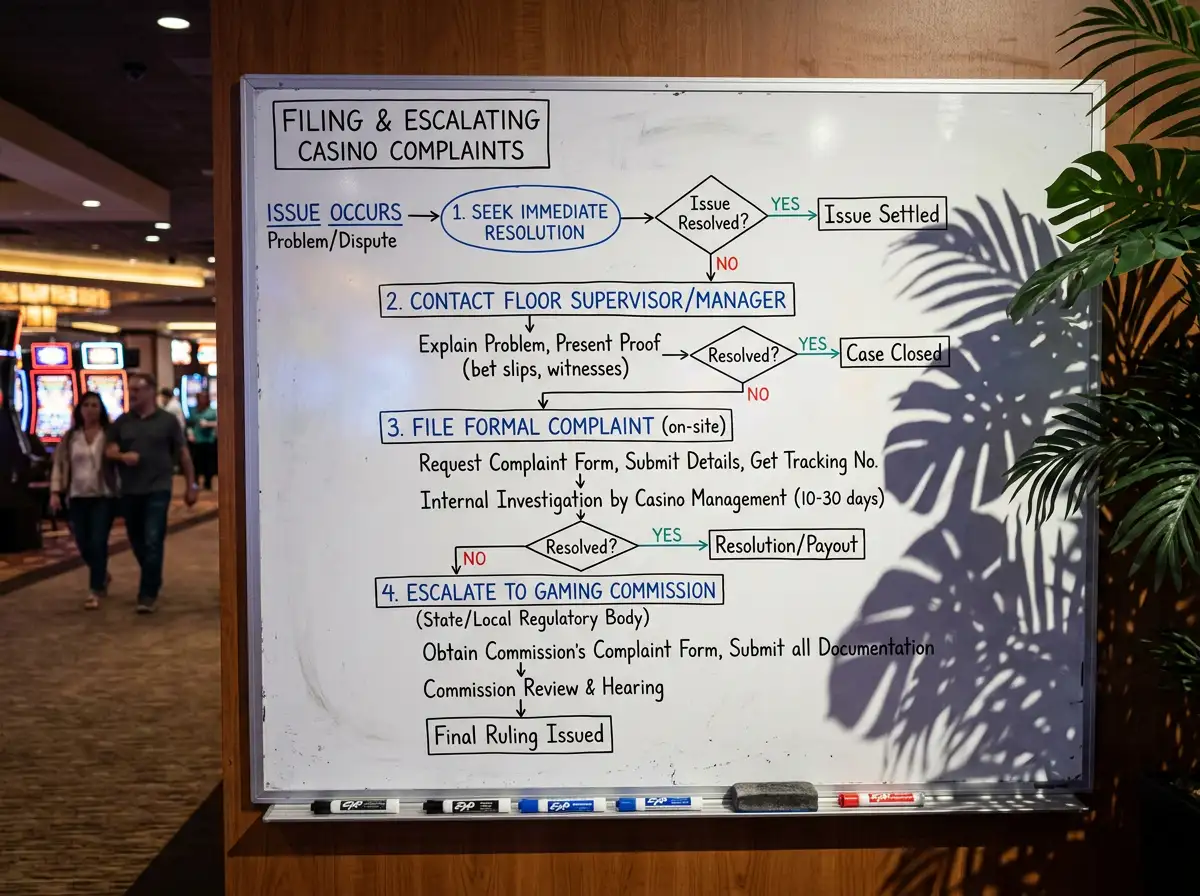
Third, file simultaneously with a third-party mediation service. AskGamblers and Casino Guru both accept complaints against Dama N.V. casinos and maintain public records of dispute outcomes. In my observation, casinos respond more promptly to publicly visible complaints than to private support tickets — the reputational incentive is real. For players navigating these issues, the responsible gambling resources page provides relevant support contacts if dispute stress is affecting your wellbeing.
The most effective complaints are specific, documented, and filed through multiple channels simultaneously. The least effective are emotional messages sent through live chat without evidence or reference numbers. The system, imperfect as it is, works better for players who approach it methodically.
One additional consideration: timing matters. Filing a complaint within days of the incident, while transaction records are fresh and support chat logs are still accessible, produces stronger cases than complaints filed weeks or months later. Some chat platforms purge session logs after a period, and your ability to retrieve evidence diminishes over time. Take screenshots during or immediately after every relevant interaction, and save them in a dedicated folder so you have a complete record if escalation becomes necessary.
The complaint landscape at Loki Casino is not uniquely bad for the offshore sector — the volume and nature of complaints are consistent with what I see across Dama N.V. properties and comparable Curaçao-licensed operators. The difference between operators is less about complaint volume and more about resolution behaviour. An operator that engages with mediation, responds to documented disputes, and occasionally resolves in the player’s favour is preferable to one that ignores complaints entirely, even if the total complaint count is similar.
Where can I file a complaint about Loki Casino?
You can file complaints through the Curaçao Gaming Authority’s official complaint channel and simultaneously through third-party mediation platforms like AskGamblers or Casino Guru. Always attempt to resolve the issue directly with Loki Casino support first, and document all communications for use in the formal complaint.
What is the average complaint resolution time at Loki Casino?
Resolution times vary significantly by complaint type. Simple issues resolved through live chat can be addressed within hours. Formal complaints filed through the CGA or third-party mediators typically take several weeks to reach a resolution, with complex cases involving balance confiscation or KYC disputes sometimes extending to several months.