
 Available in GB
Content
- What a Malta Casino Licence Does—and Does Not—Authorise
- Can You Use an MGA Casino from Great Britain?
- How to Read a Casino’s Licence Claims
- What Makes a Casino Suitable for UK Players?
- Check How a Casino Protects Your Balance
- Malta-Licensed Casinos and UK Rules in 2026
- What the Malta Gaming Authority Licence Covers
- Bonuses, Deposits and the Cost of Wagering
- MGA Casinos Outside GamStop: What That Means
- Assessing a Newly Launched Casino Without Guesswork
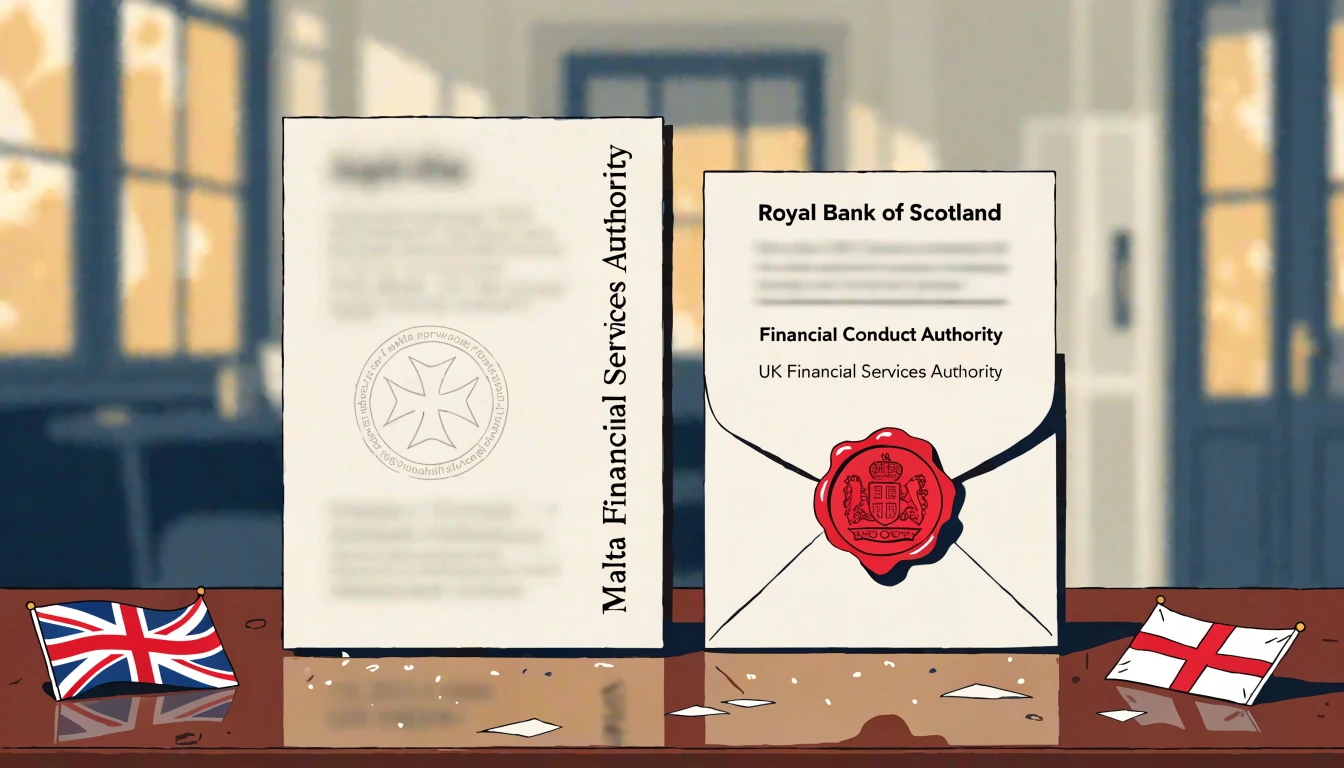
An MGA licence covers an operator under Malta’s framework, while serving customers in Great Britain requires the relevant UK authorisation.
What a Malta Casino Licence Does—and Does Not—Authorise
A Malta Gaming Authority (MGA) licence and a UK Gambling Commission (UKGC) licence answer different regulatory questions. An MGA licence relates to the operator’s authorisation under Malta’s gambling framework. It does not, by itself, establish that the operator is authorised to provide remote gambling to customers in Great Britain.
That distinction matters because a company can be based in one country while offering its services to people in another. The operator’s location does not determine which rules apply to its customers. For Great Britain, the relevant question is whether the operator holds the UKGC licence required to provide remote gambling facilities to consumers there.
What a Malta licence tells you
When an operator describes itself as Malta-licensed, the claim concerns its regulatory status in Malta. It is not a general permission that automatically applies in every country where its website can be reached. Nor does the phrase “Malta online casino” tell you which markets the operator is authorised to serve.
The licence should therefore be understood as jurisdiction-specific, rather than as a universal approval of the business. It may be relevant to the operator’s activity under Maltese regulation, but it does not transfer regulatory authority to the UKGC or satisfy a separate UK licensing requirement.
This is the key limit of a Malta licence for a person in Great Britain: it cannot stand in for the operating licence required by the British regulator. Even if a casino is described as one of the best online casinos in Malta, or presents a Malta licence prominently, those descriptions do not establish permission to serve British customers.
Online Casino No Registration UK: What It Means
Why the operator’s location is not decisive
Remote gambling crosses borders without the operator having to move its business to each country where customers are located. A website may be run from Malta and still offer gambling to people in Great Britain. The location of the company and the location of the customer are separate parts of the arrangement.
For Great Britain, the rule follows the market being served: operators providing remote gambling facilities to consumers there must hold a UKGC licence, regardless of where the business is physically based. A Malta licence does not remove that requirement. Where an operator offers gambling services to UK consumers without the required UKGC licence, that offer is illegal.
This is why a list described as the top online casinos in Malta would not answer the important question for a British customer. A ranking, a claim of popularity, or a Malta-based licence says nothing by itself about whether an operator has the authorisation needed for the British market.
Treat the licences as separate authorisations
It is useful to keep three ideas apart:
- Where the operator is based: its physical location.
- Which regulator has licensed it: the jurisdiction covered by that authorisation.
- Where it offers gambling: the markets in which it provides services to customers.
These details can overlap, but they are not interchangeable. An operator may have an overseas location and an overseas licence, yet still need a UKGC licence if it provides remote gambling to consumers in Great Britain. Conversely, the presence of an MGA licence does not prove that the operator holds a UKGC licence.
The same distinction applies whether a site promotes real-money online casinos in Malta, advertises itself as a Malta-licensed casino, or calls itself a new Malta online casino. The wording may describe the operator’s claimed connection to Malta, but it does not settle its status in Great Britain. A new launch is not exempt from the UK requirement simply because it has only recently begun operating or because its licence comes from another jurisdiction.
What to take from the distinction
A Malta licence is not meaningless; it identifies a regulatory connection to Malta. But its scope should not be enlarged in your mind into approval for every country. For a casino serving Great Britain, the relevant authorisation is a UKGC licence. An MGA licence alone does not provide it.
That is the practical answer when comparing Malta-licensed casinos with sites authorised for the British market: the licence’s jurisdiction matters more than the country named in a site’s branding or description. If the operator is offering remote gambling to consumers in Great Britain, its physical base in Malta does not change the UKGC licensing requirement.
Legal Requirement
Where an operator offers gambling services to UK consumers without the required UKGC licence, that offer is illegal.
Can You Use an MGA Casino from Great Britain?
If you are in England, Scotland or Wales, the key question is not where an online casino is based. It is whether the operator holds a UK Gambling Commission (UKGC) licence for providing remote gambling to customers in Great Britain. An operator serving people in these countries must hold that licence even if its business is located in Malta or elsewhere.
This means a Malta Gaming Authority (MGA) licence and a UKGC licence have different roles. The MGA licence is issued by Malta’s regulator; it does not, by itself, authorise an operator to provide real-money online gambling to customers in Great Britain. A site may describe itself as a Malta casino or display an MGA licence, but that information alone does not establish that it can lawfully serve you where you are.
The rule for England, Scotland and Wales
The Gambling Act 2005 governs gambling in England, Scotland and Wales. Under the British licensing system, an operator that offers remote gambling to consumers in these countries must hold the relevant UKGC licence. The requirement applies regardless of the operator’s physical location: operating from Malta does not create an exception.
The practical distinction is between the operator’s location and the market it serves. A company can be based abroad, but if it provides real-money gambling to customers in Great Britain, the British licensing requirement still applies. Conversely, seeing a Malta address or an MGA licence does not show that the operator holds permission for the British market.
Gibraltar Casino License in the UK: What It Means
So, if you are physically in Great Britain and considering an MGA casino, do not treat “licensed in Malta” as an answer to whether you can use it lawfully. For real-money play, the relevant question is whether the operator also holds a UKGC licence covering its service to British customers. Without that, the operator is not authorised to offer you that service in Great Britain.
This rule is about the operator’s permission to provide gambling facilities. It does not turn on whether the website loads, accepts a registration, or displays games when viewed from your location. Technical access is not the same as regulatory authorisation. A site’s availability therefore cannot establish that it is permitted to serve Great Britain.
What “available” means
People may use “available” to mean several different things: a website opens, a player can create an account, or an operator is legally authorised to offer gambling. Those are not interchangeable. A site might be technically reachable while still lacking the UKGC licence required to serve customers in Great Britain. The legal test concerns the operator’s provision of the service, not merely whether a page can be viewed.
The same distinction matters when a casino accepts customers from more than one country. Its licence for one jurisdiction does not automatically extend to another. A regulator’s authority is bounded by its own legal framework; a Malta authorisation is not a substitute for the UKGC’s authorisation where the customer is in Great Britain.
This also explains why the phrase “MGA casinos for UK players” needs care. “UK” is often used informally to describe the whole country, but gambling regulation does not operate identically in every part of it. For residents of England, Scotland and Wales, the British rule is clear: real-money remote gambling must be offered by an operator with a UKGC licence. An MGA licence alone does not meet that requirement.
Technical Access
Technical access to a website is not the same as regulatory authorisation; a site’s availability does not establish that it is permitted to serve Great Britain.
Northern Ireland is different
Northern Ireland is not covered by the UKGC’s jurisdiction in the same way as Great Britain. It has a separate regulatory regime, so the rule for England, Scotland and Wales should not simply be applied to a player in Northern Ireland as though the legal framework were identical.
That difference does not mean a Malta licence automatically settles whether a service is lawful in Northern Ireland. It means that the relevant regulatory question must be considered under Northern Ireland’s separate arrangements rather than answered by applying the Great Britain rule. The UKGC is not the regulator for remote gambling there in the same way it is for Great Britain.
Your location therefore matters when assessing an online casino. If you are in England, Scotland or Wales, the operator must have a UKGC licence to provide real-money remote gambling to you. If you are in Northern Ireland, the regulatory position differs and should not be inferred from the Great Britain rule. In neither case does a website’s label alone establish the legal position.
For a player in Great Britain, the decisive point is not whether a casino is Maltese, whether it calls itself an online casino in Malta, or whether its site is accessible. It is whether the operator holds the UKGC licence required for the service it is offering to you. That is the jurisdictional distinction to keep in view whenever an overseas licence is presented as a reason a casino can serve British customers.
Online Casinos With No Sister Sites in the UK
How to Read a Casino’s Licence Claims
A Malta Gaming Authority (MGA) badge or a statement that a site holds a Malta operating licence tells you what the operator claims about its authorisation in Malta. It does not establish that the site is authorised to provide gambling to customers in Great Britain. Treat those as separate checks: one concerns the claim about Malta; the other concerns the operator’s status with the UK Gambling Commission (UKGC).
Start with the operator’s own terms and licence information. Look for the legal name of the company said to hold the licence, rather than relying only on a brand name. A brand can differ from the company that operates the gambling service, so the names should be clearly connected. Check whether the site identifies the MGA as the regulator and whether its wording describes an operating licence, rather than using a vague phrase such as “regulated” without saying by whom.
Then compare the information with the MGA’s official material. Check that the company and the site you are using correspond to the details the authority publishes. A genuine licence claim about one company or website is not evidence that another company or a different domain is covered. If the information does not match, is unclear, or cannot be corroborated, do not rely on the claim or deposit while the discrepancy remains unresolved.
A logo alone is weak evidence: it can be copied, and it does not show which company or service it refers to. The same applies to a licence number displayed without enough context to connect it to the operator and the website. The useful question is not simply whether a page contains the words “MGA licensed”, but whether the claimed authorisation can be tied to the precise operator and site in front of you.
Do
- Look for the legal name of the company
- Compare site details with official MGA material
- Check for a specific UKGC licence
Don’t
- Rely on a logo or badge alone
- Use a licence number without context
- Assume an MGA licence covers the UK
For Great Britain, make a separate check with the UKGC. The relevant question is whether the company providing the remote gambling service holds the required UKGC licence for that activity. An MGA authorisation cannot be used as a substitute, and the UKGC does not validate an overseas licence on the MGA’s behalf. The two regulators do not have a reciprocal arrangement that makes one regulator’s authorisation count as the other’s.
This distinction also sets a limit on what you can expect from the UKGC if something goes wrong. It does not approve offshore licences and does not accept complaints about operators licensed outside the UK. A Malta licence claim therefore does not give you a route to ask the UKGC to resolve a dispute with a non-UKGC operator. Do not infer UKGC oversight from a Malta badge, references to European regulation, or a claim that the site serves international customers.
Keep the checks distinct in your notes: what the operator claims about its Malta status, what you could verify against the MGA’s information, and whether the service is authorised by the UKGC for Great Britain. A positive result in the first check cannot answer the third. If the site’s identity or licence details are inconsistent, treat that as an unresolved warning rather than filling the gap with the assumption that a Malta licence covers the UK.
What Makes a Casino Suitable for UK Players?
Once you have established that a casino is authorised to serve customers in Great Britain, assess what happens when you play and when something goes wrong. A Malta connection, a large game catalogue or an attractive welcome offer does not answer those questions. The useful checks concern the games, the account controls and the complaint process.
Anjouan Casino Licence in the UK: What It Means
Check how games are tested
For a UKGC-licensed casino, games must be tested and certified by approved testing houses. This applies to the games offered under that licence, rather than being a general claim that a site’s software is “fair”. Look for clear information about game rules and how each game works before staking money. If the casino cannot explain who tests its games or how to find the rules, do not treat a Malta licence claim as a substitute for the UK requirements.
The same principle applies across different game types. Whether you are considering slots, roulette or table games, the relevant question is not which Malta-based casino has the biggest selection. It is whether the UK-facing service operates within the required testing framework and gives you enough information to understand the game before you play.
Understand the complaint route
A suitable UK-facing casino should make its complaints process easy to locate and explain the steps in order. Raise a problem with the operator first, using its stated internal process. If it remains unresolved, the operator’s approved Alternative Dispute Resolution provider is the next route. If the dispute is still unresolved after that, it can be taken to the Gambling Commission.
Check that the casino names its ADR provider and explains how to contact it. A vague promise to “resolve issues fairly” is not the same as access to an independent dispute-resolution service. Keep copies of relevant messages and records of the issue, so you can describe what happened consistently if the complaint moves beyond the operator.
A Malta regulator’s presence does not mean that the Gambling Commission will handle a complaint about a non-UKGC casino. The route described here is part of the UKGC framework. That distinction matters when comparing sites: a complaint channel should match the authorisation under which the casino is serving you.
Complaint Process
Step 1: Internal Process
Raise the problem with the operator first using their stated internal process.
Step 2: ADR Provider
If unresolved, contact the operator’s approved Alternative Dispute Resolution provider.
Step 3: Gambling Commission
If the dispute remains unresolved after ADR, it can be taken to the Gambling Commission.
Look at controls you can use
Assess whether the account gives you practical ways to manage play. UKGC-licensed operators must offer deposit and loss limits, session limits, time-outs and self-exclusion. Session reminders and reality checks are also among the controls required for UKGC-licensed operators. Find these settings before depositing, and check whether they are accessible from your account rather than buried in general help pages.
These tools do different jobs. A deposit limit constrains the amount you can add; a loss limit concerns losses; a session limit or reminder helps you keep track of time. A time-out temporarily blocks access, while self-exclusion is intended for a more sustained break. Knowing where each control sits makes it easier to use the one that matches your need.
No single feature makes a casino the best choice for every player. A more reliable assessment is whether the games meet the testing requirement, the complaint route is specific and usable, and the account controls are available before you need them. Treat claims about bonuses or a “best Malta casino” label as separate from these checks: they do not show how the site handles disputes or supports safer play.
Check How a Casino Protects Your Balance
A balance shown on your account is money the casino owes you, not proof that the same amount is sitting in a separate account ready for withdrawal. The important distinction is how the operator holds player funds in relation to the money it uses to run the business.
For a UKGC-licensed operator, player funds must be kept separate from operational funds. Operational funds pay the business’s costs; player funds are the money held for customers. Keeping the two apart is intended to protect customer money if the casino becomes insolvent. If both pools are mixed, money used to keep the business running may be harder to distinguish from money owed to players when the business fails.
Online Slots Not on GamStop: How Exclusion Works
Segregation is therefore a protection against one specific risk: the operator’s business failure. It does not mean a casino cannot fail, and it should not be read as a promise that every balance will be returned immediately or without difficulty in every insolvency. The separation concerns how funds are held; what happens to customer claims after a failure depends on the circumstances. A displayed balance alone does not explain those arrangements.
When assessing Malta-based casino sites, focus on the protection attached to the operator serving you, rather than assuming that a Malta connection tells you how your balance is handled. A site’s location, branding or payment interface does not show whether customer funds are separated from business funds. Nor does the word “licensed” by itself explain the treatment of balances if the company cannot continue operating.
For a casino serving customers in Great Britain, the relevant point is whether the operator is a UKGC licensee and is subject to the UKGC requirement to segregate player funds. That is a concrete distinction from relying on a site’s general claims about safety. It connects the funds safeguard to an identifiable regulatory obligation.
Before depositing, look for a clear explanation of how customer balances are protected if the business becomes insolvent. Read the wording closely: it should describe the treatment of player funds, not just use broad assurances such as “secure” or “protected”. Those terms do not tell you whether funds are kept apart from operating money. If the explanation is unclear, you cannot infer the arrangement from a Malta Gaming Authority reference or from a casino’s reputation.
Attention: Segregation of funds is a protection against business failure, but it is not a guarantee that every balance will be returned immediately in every insolvency.
This check is separate from judging whether the games, payments or customer service suit you. It asks a narrower question: if the operator stops trading, what distinction has it maintained between your balance and its own business funds? For UKGC licensees, segregation is required for that purpose. Treat it as a meaningful safeguard, but not as a guarantee against every consequence of insolvency.
Malta-Licensed Casinos and UK Rules in 2026
For 2026, the key point is that an operator’s location and its permission to serve customers in Great Britain are separate matters. A casino may be based in Malta and hold an operating licence there, but that fact alone does not authorise it to provide remote gambling to people in Great Britain.
The relevant UK regulator is the UK Gambling Commission. Its licensing requirement applies to operators providing remote gambling facilities to consumers in Great Britain, regardless of where the operator is physically established. Moving the business, servers or company registration overseas does not remove that requirement when the service is offered to the British market.
That distinction matters when you encounter casinos with an MGA licence or other Malta-based licensing claims. The claim describes an authorisation connected with Malta; it does not, by itself, establish permission to serve Great Britain. The same applies to online casinos licensed in Malta: their overseas licence cannot be treated as a substitute for a UKGC licence.
In practical terms, the relevant question is not simply whether a casino has a licence. It is whether the operator holds the authorisation required for the market in which it is offering gambling. For consumers in Great Britain, that means a UKGC licence. The rule is tied to the service and its customers, not to the operator’s address.
Curaçao Casino Licence UK: What It Means
This also explains why a list of “top” casinos with an MGA licence would not answer the important UK-facing question. A Malta licence may tell you something about the operator’s regulatory status in Malta, but it does not establish that the operator is authorised by the UKGC. Nor does a Malta-based brand name or website address change which regulator’s permission is required for a service directed at Great Britain.
If you are assessing an online casino for use from Great Britain in 2026, treat its Malta connection and its UK authorisation as distinct claims. The first cannot prove the second. The UKGC’s role is to license and oversee gambling in Great Britain, and operators serving consumers there must meet that local licensing requirement even when their business is based abroad.
Best casino sites in the UK
- EvoSpinBonus: 125% up to €2500 + 125 Free Spins · Payout speed: 1-3 business days
- BritsinoBonus: Welcome Package – Get your £2,200 + 2,000 FS · Payout speed: 1-3 business days
- AmunbetBonus: Join now and get 450% up to 2,700 GBP + 450 FS · Payout speed: 1-3 business days
- DieselwinBonus: Welcome Pack 250% up to £4000 + 200 FS · Payout speed: 1-3 business days
- Revery PlayBonus: 100% up to€1,000+ 100 FS · Payout speed: 1-3 business days
- SpinFormulaBonus: 550% Up To £15,000 + 550 FS · Payout speed: 1-3 business days
- JetsetspinsBonus: 200% Bonus + 100 Free Spins + Free Royal Wheel · Payout speed: 1-3 business days
- NightWinBonus: £900 + 400 free spins · Payout speed: 1-3 business days
- WinBeastBonus: €5000 + 500 FS + €650 Freebet · Payout speed: 1-3 business days
What the Malta Gaming Authority Licence Covers
A Malta Gaming Authority (MGA) licence places an operator under the authority of Malta’s gambling regulator. One specific requirement concerns customer money: an MGA licensee must keep player funds in segregated accounts held at an approved financial institution. This separates those funds from the operator’s other money in the account structure.
For you, the practical meaning is limited but important. The requirement identifies how an MGA-regulated operator must hold player funds; it does not, by itself, establish that a particular site is authorised to accept customers in Great Britain. Nor should segregation be read as a guarantee that every balance will be returned in every circumstance. It describes the required separation and where the funds must be held, not an automatic outcome if a business fails.
Segregated Accounts
Accounts held at an approved financial institution where player funds are kept separate from the operator’s operational money.
The distinction matters when you encounter a Malta Gaming Authority casino or see a site described as one of the authority’s licensed online casinos. The Malta licence relates to the operator’s status under the MGA. Permission to provide remote gambling to people in Great Britain is a separate question governed by the UK’s licensing system. An operator serving consumers in Great Britain must hold a UK Gambling Commission (UKGC) licence, even if its business is based elsewhere or it also holds an MGA licence.
These are separate obligations rather than alternatives. The MGA’s player-fund rule does not substitute for a UKGC licence, and an MGA licence alone does not make an online casino authorised to serve Great Britain. The operator’s location does not change that requirement.
This also explains why a Malta Gaming Authority casino list cannot, on its own, answer whether a site is available lawfully to customers in Great Britain. An MGA listing concerns the authority’s licensing remit; it is not a list of UKGC-authorised operators. The two licences address different regulatory relationships, so one should not be treated as evidence of the other.
When reading a claim about an MGA licence, keep the scope precise: the MGA requirement covered here is that player funds are held separately at an approved financial institution. The UKGC requirement concerns permission to provide remote gambling to consumers in Great Britain. A Malta licence may describe the operator’s position in Malta, but it does not remove the need for the relevant UK authorisation.
Casinos Without a UK Licence: What It Means
Bonuses, Deposits and the Cost of Wagering
A bonus amount is not necessarily cash you can withdraw. If an offer has a wagering requirement, you must place qualifying bets before the bonus can convert into withdrawable funds. The stated requirement and the rules defining qualifying play determine how much betting is needed; the advertised bonus value alone does not.
A specialist review illustrates the arithmetic with a £20 bonus and a 35x wagering requirement: the player would need to place £700 in qualifying bets. That is a worked example, not a claim that every Malta casino bonus uses those terms. To interpret an offer, check what amount the multiplier applies to and which bets count. If the rules apply the multiplier to the bonus, the calculation starts with the bonus value; different wording can change the result.
Game contribution rates also affect the total amount of play. A bet may count in full, count only in part, or not count towards the requirement. Slots are listed as contributing 100% of each bet, while table games may contribute 10% or 20%; some contribute nothing. If a game contributes only 10%, only that share of each bet is credited towards the wagering target. So reaching the same target can require substantially more betting on a lower-contribution game than on a game that counts in full.
This is why the eligible-game list matters as much as the multiplier. A game can be available to play but excluded from bonus wagering, or its bets can count at a reduced rate. Depositing or playing without checking those terms can leave you with a bonus balance that has not progressed as expected. The relevant calculation is based on qualifying bets after applying the contribution rate, not simply on the amount deposited or the total shown in your account.
Bonus Calculation
Step 1: Identify the Requirement
Take the bonus amount (e.g., £20) and multiply it by the wagering requirement (e.g., 35x) to find the total qualifying bets needed (£700).
Step 2: Apply Contribution Rates
Check the game contribution rate (e.g., slots at 100%, table games at 10%).
Step 3: Calculate Actual Play
Determine the total betting needed based on the contribution; a 10% game requires substantially more betting to reach the same target as a 100% game.
The same method applies whether an offer is described as a Malta online casino bonus, an MGA casino bonus or a no-deposit bonus: identify the amount subject to wagering, the qualifying games and each game’s contribution. A no-deposit label does not explain those mechanics. A Bitcoin payment method does not, by itself, change them either; the wagering rules determine which play counts. When terms do not state clearly how the calculation works, you cannot reliably estimate the play required from the headline offer alone.
MGA Casinos Outside GamStop: What That Means
A Malta-based casino may not appear on GamStop because GamStop participation is required of operators licensed by the UK Gambling Commission, not of casinos simply because they hold an MGA licence. Offshore casinos do not take part in the UK scheme. The licence jurisdiction therefore affects which self-exclusion system applies: an MGA licence does not enrol a casino in GamStop.
GamStop lets you exclude yourself from all UKGC-licensed gambling sites for a chosen period: six months, one year or five years. While the exclusion is active, those sites are included in the scheme’s coverage. A casino outside GamStop is not included, so the exclusion does not prevent you from accessing that casino.
That distinction matters if you are relying on self-exclusion to create a barrier to gambling. Excluding yourself through GamStop covers participating UKGC-licensed operators; it does not extend automatically to an MGA casino or other offshore site. A Malta online casino not on GamStop can therefore remain accessible through its own systems, if it offers them. Those systems are separate from the UK scheme and do not expand GamStop’s coverage.
Before choosing a casino outside GamStop, consider what the exclusion is meant to do for you. If you want a block across UKGC-licensed gambling sites, using a non-participating casino means that block will not apply there. Do not treat a Malta licence, or a casino’s own account controls, as a substitute for GamStop participation.
If you have already self-excluded and are looking for another place to gamble, pause before opening an account or depositing. Moving to a site outside the scheme removes the barrier GamStop provides at participating operators; it does not cancel your exclusion at those sites, but it leaves that other site outside its reach. For support with gambling-related harm, seek help from an appropriate support service rather than relying on a different casino’s controls.
Assessing a Newly Launched Casino Without Guesswork
A new Malta-based casino may attract attention because it has recently appeared online, but a launch date says nothing about whether it is suitable for you. Assess the site by checking what it requires before play and whether its arrangements match where you live.
For customers in England, Scotland and Wales, the first practical test is whether the operator holds a UKGC licence for the service it offers. A Malta address or MGA licence does not replace that requirement. If you cannot establish that the site is authorised to serve customers in Great Britain, do not treat its availability or branding as proof that it is.
Age verification is a concrete requirement, not a box to postpone until withdrawal. The Gambling Commission requires UKGC-licensed operators to confirm that a customer is at least 18 before allowing them to deposit or play. A site that lets you gamble first and promises to check your age later is not following that requirement.
Read the registration and account steps before entering payment details. Note when identity information is requested, whether the site blocks deposits and play until age is confirmed, and which company is named as the operator. Keep the operator’s stated terms and any verification messages so you can compare what happened with what the site said would happen.
Payment options, including Neteller, do not establish a casino’s regulatory status or suitability. They only describe a way to move money. Treat claims about a new MGA casino in 2026 as claims to verify, not as evidence of approval or protection. If the operator’s identity, authorisation or age-check process is unclear, pause rather than depositing. A newly launched site has no special exemption from the rules that apply to established UKGC-licensed operators.
How can you check whether an online casino is legal?
Check whether the operator holds a UK Gambling Commission licence to offer remote gambling to customers in Great Britain. A Malta or other offshore licence does not replace the required UKGC licence.
What tools do UK operators have to provide?
UKGC-licensed operators must offer tools including deposit and loss limits, session limits, time-outs and self-exclusion through GamStop. They must also provide session time reminders and reality checks.
Are offshore casinos legal for UK players?
An offshore operator offering gambling to customers in Great Britain without a UKGC licence is acting illegally. The operator’s location or overseas licence does not remove the UK licensing requirement.
Are no-deposit spin offers legal in Great Britain?
A no-deposit offer must come from an operator with the required UKGC licence to serve customers in Great Britain. You must be physically located in Great Britain to claim such an offer.